
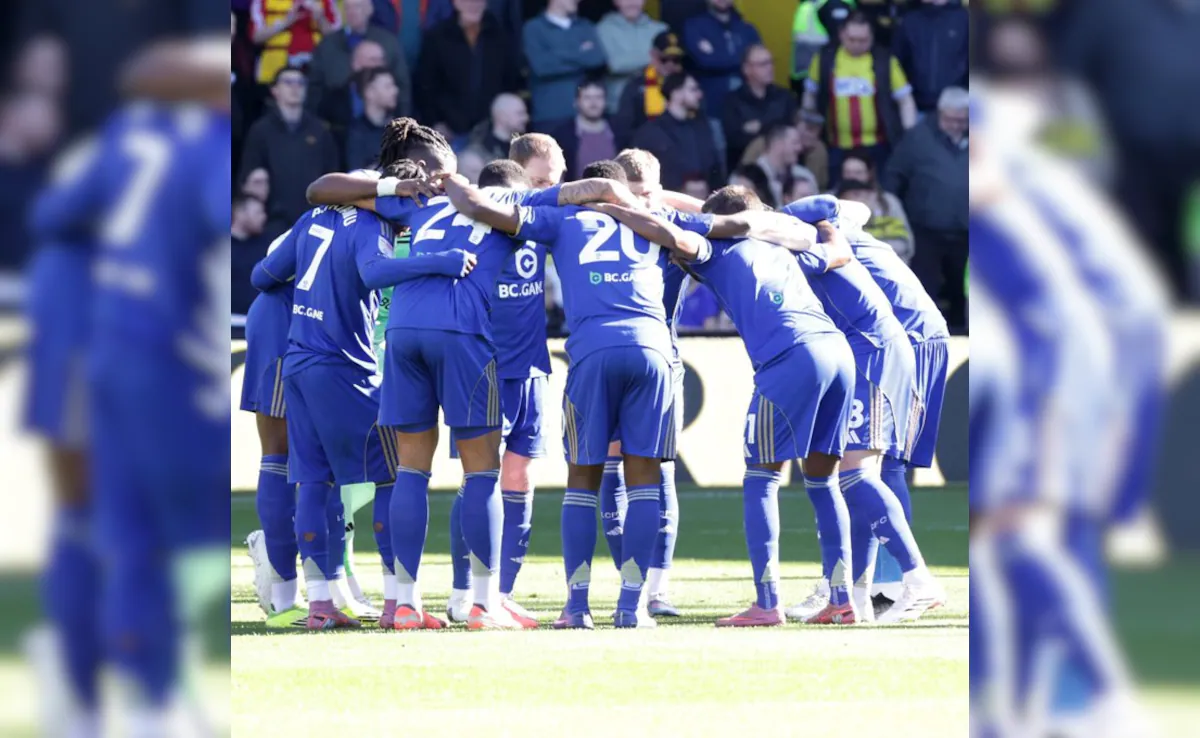


A decade after their historic 2016 title win, Leicester City face a shocking drop to the third tier following years of mismanagement, poor recruitment, and on-field decline.
Thank you for reading this post, don't forget to subscribe!Ten years after scripting one of football’s greatest underdog stories, Leicester City are staring at a dramatic fall from grace, with relegation to EFL League One looming large. If Gary Rowett’s side fail to secure a win against Hull City, their fate could be sealed in what would mark one of the most stunning declines in modern English football.
Currently sitting eight points from safety with just three matches remaining, the Foxes appear destined for a return to the third tier for the first time since the 2008–09 season. This would also mark their third relegation in just four seasons, having already dropped out of the Premier League in 2023 and again in 2025.
The contrast with their golden era could not be starker. Under Claudio Ranieri, Leicester defied 5,000-1 odds to win the Premier League in 2016, powered by stars like Jamie Vardy, Riyad Mahrez, and N’Golo Kanté. They followed it up with a run to the UEFA Champions League quarter-finals and lifted the FA Cup in 2021 under Brendan Rodgers.
However, that success masked deeper structural issues. Since their initial relegation in 2023, the club’s hierarchy, led by owner Aiyawatt Srivaddhanaprabha and director Jon Rudkin, have been widely criticized for failing to address squad weaknesses and financial instability. A six-point deduction this season for breaching spending regulations further compounded their struggles.
Managerial instability has also played a key role. After Ranieri’s dismissal shortly after the title win, Leicester cycled through multiple managers including Craig Shakespeare and Claude Puel, with mixed results. Even recent appointments like Enzo Maresca—who guided them to promotion—ended abruptly, while successors such as Steve Cooper and current boss Gary Rowett have struggled to steady the ship.
On the pitch, the squad has lacked both balance and quality. High-profile signings like Patson Daka, Jannik Vestergaard, Harry Souttar, and Oliver Skipp have failed to deliver consistent performances, contributing to a bloated wage bill that once exceeded £200 million.
The departure of club legend Jamie Vardy at the end of last season symbolized the end of an era. Since then, Leicester have struggled for identity and leadership, with fans voicing their frustration through protests and confrontations with players such as Harry Winks.
The club’s downward spiral has also been influenced by off-field tragedy. The death of former owner Vichai Srivaddhanaprabha in the 2018 helicopter crash left a leadership void that has proven difficult to fill.
As Rowett admitted, Leicester’s problems are rooted not just in effort, but in a clear “lack of quality.” With morale low and results failing to improve, the prospect of facing clubs like Wycombe Wanderers and Mansfield Town next season is becoming increasingly real.
Once the embodiment of football’s most magical fairytale, Leicester City now stand on the brink of a harsh reality. Whether they can conjure another miracle remains to be seen, but their current trajectory serves as a cautionary tale of how quickly success can unravel without strong leadership and long-term planning.


