
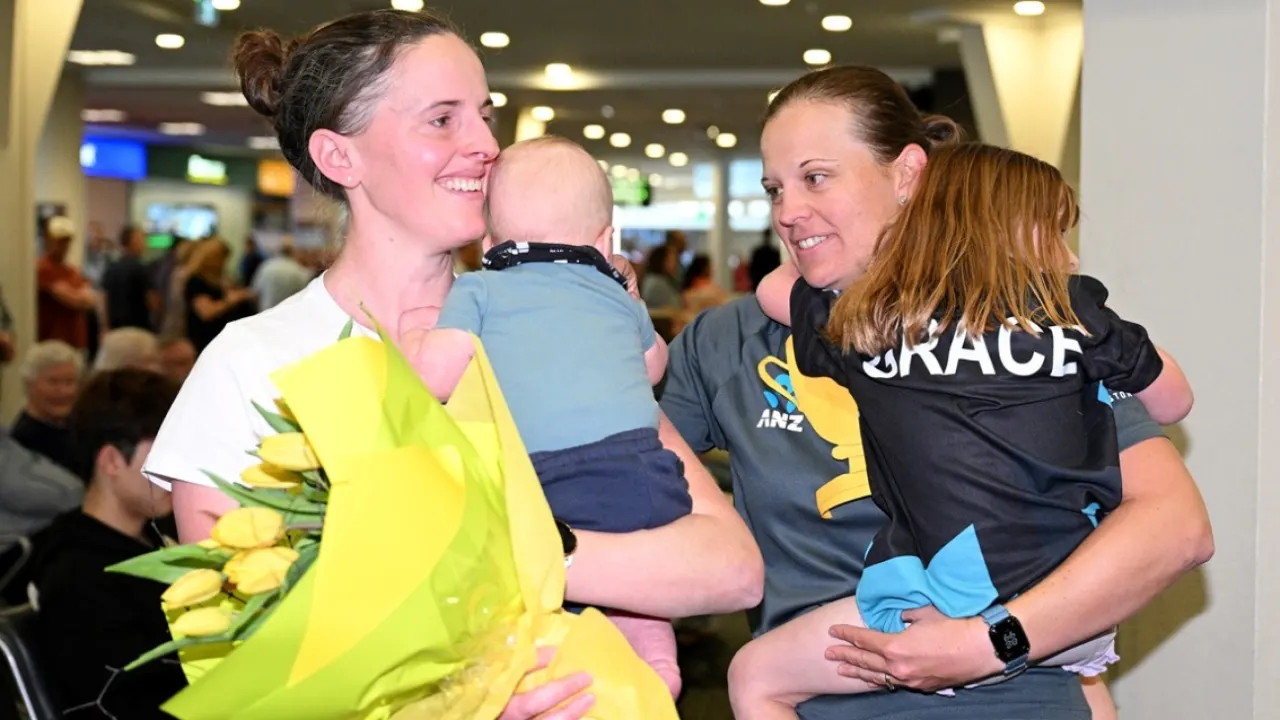


New framework aims to help female players balance motherhood and professional cricket, ensuring pregnancy does not end sporting careers
Thank you for reading this post, don't forget to subscribe!The International Cricket Council (ICC) has unveiled its Return-to-Play Post-Pregnancy Guidelines, a landmark initiative designed to support women cricketers returning to the game after pregnancy and childbirth. The guidelines were officially launched on Monday during a rest day at the ongoing Women’s T20 World Cup in England.
The comprehensive framework provides national cricket boards, coaches, medical teams, and players with practical guidance to help mothers safely and confidently return to competitive cricket. The ICC stated that the guidelines are intended to serve as a flexible template, allowing Member nations to develop their own maternity and return-to-play policies in line with local laws and regulations while prioritizing player welfare.
Dr. Philippa Inge, Australia team doctor and member of the ICC Medical Advisory Committee, led the development of the guidelines. She emphasized that the initiative is aimed at demonstrating that motherhood should not mark the end of a player’s professional career.
According to Dr. Inge, the framework has been created to help cricket boards facilitate a smoother transition back into the sport for players who choose to start families during their playing careers. With the increasing professionalization of women’s cricket, more athletes are balancing elite competition with motherhood, making structured support systems increasingly important.
Several international cricketers have successfully returned to the game after giving birth. West Indies leg-spinner Afy Fletcher, currently participating in the Women’s T20 World Cup, became a mother in 2021 and later resumed her international career. Former Pakistan captain Bismah Maroof returned to international cricket after the birth of her daughter and famously travelled to the 2022 Women’s World Cup with her child before retiring in 2024.
Other notable examples include New Zealand all-rounder Amy Satterthwaite, who returned to international cricket after maternity leave, and South Africa pacer Masabata Klaas, who has spent much of her international career as a mother. India’s Sneha Deepthi also made headlines when she was signed by Delhi Capitals for the inaugural Women’s Premier League (WPL) season in 2023 while raising a young child.
Fletcher welcomed the ICC’s move, describing it as a major step forward for women’s cricket. She highlighted the emotional and physical challenges that come with returning to elite sport after childbirth, particularly the difficulty of spending extended periods away from family.
The ICC’s new framework is built around the “6 Rs” model — Ready, Review, Restore, Recondition, Return, and Refine. These stages cover the entire recovery and reintegration process, from post-birth recovery and medical assessments to structured training, cricket-specific conditioning, competitive return, and long-term monitoring.
Key recommendations include creating flexible training environments, maintaining access to medical and support services, providing childcare guidance, ensuring suitable facilities for feeding and caring for babies at venues, and offering travel support wherever possible.
With the introduction of these guidelines, the ICC aims to strengthen support systems for female cricketers worldwide and encourage more athletes to continue their careers after becoming mothers, marking another significant step in the growth and inclusivity of women’s cricket.


