
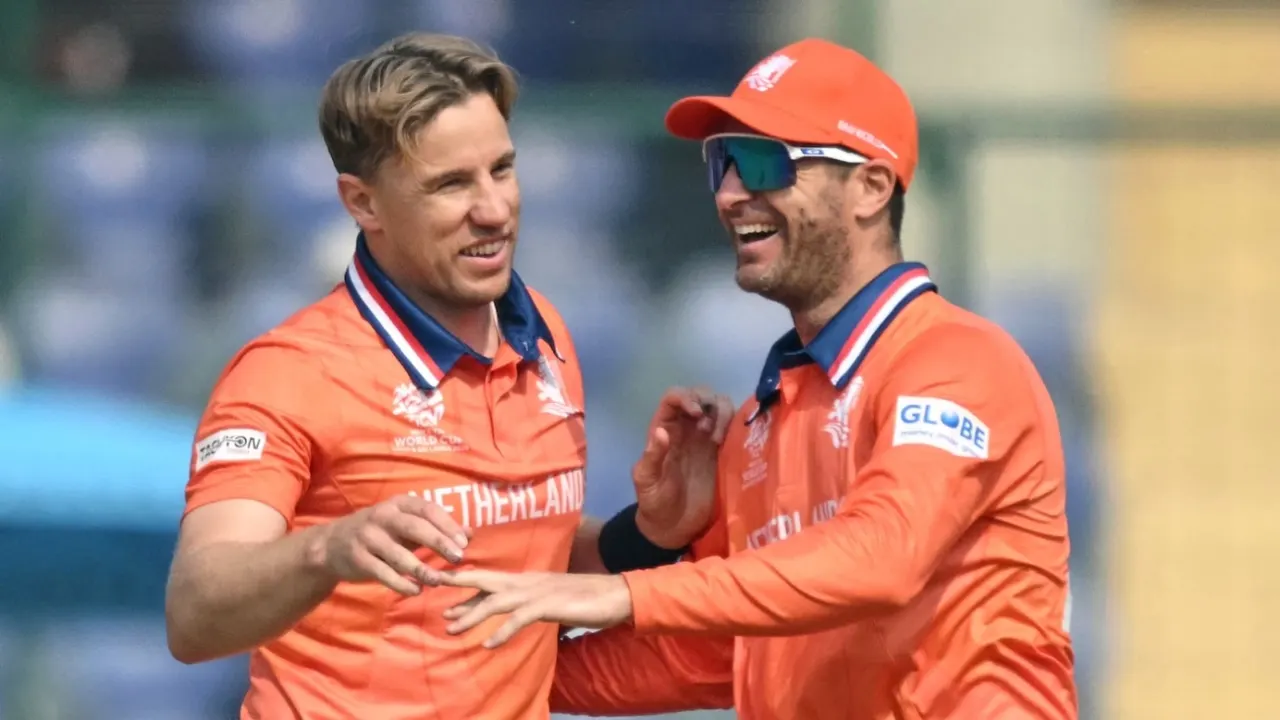


Playing “one Test in two years” doesn’t help an Associate team, says Netherlands allrounder
Thank you for reading this post, don't forget to subscribe!Associate teams have continued to challenge the established order at the T20 World Cup 2026, and while the Netherlands national cricket team are keen to keep that momentum going, they are also clear about what kind of progress truly benefits them at this stage. For the moment, Test cricket does not fit into that plan.
Speaking on the eve of their match against the USA national cricket team, Dutch allrounder Logan van Beek explained why red-ball cricket is not a priority. He said that qualifying for Test status only to play “one Test in two years” would do little to help an Associate side develop, especially without regular exposure or a strong domestic foundation.
Van Beek pointed to structural issues within Dutch cricket, highlighting the absence of a first-class system. The Netherlands currently play only T20 and one-day cricket domestically, with no red-ball tournament in place. As a result, very few players in the national squad have regular experience of first-class cricket, something van Beek believes is essential before stepping into the Test arena.
He explained that while T20 cricket allows for frequent upsets and one-day cricket offers a longer contest, Test cricket demands sustained quality and depth. In red-ball cricket, the stronger team usually wins, and without a competitive first-class structure producing a deep pool of players, it becomes extremely difficult to compete consistently at that level.
Funding is another major factor shaping the Netherlands’ strategy. Van Beek stressed that success in white-ball tournaments directly influences rankings, sponsorship, and financial support. By focusing on T20s and ODIs and pushing into the latter stages of major tournaments, the Dutch can improve their rankings and unlock greater funding, which is vital for long-term growth.
The Netherlands also benefit from players with overseas careers and Dutch heritage, such as Roelof van der Merwe and van Beek himself. Van Beek noted that gaining Full Member status could complicate matters, as it would classify him as an overseas player in New Zealand, potentially limiting his ability to play first-class cricket there and reducing his red-ball exposure altogether.
For now, van Beek believes the balance works in the Netherlands’ favour, with players able to represent the Dutch while continuing to develop as first-class cricketers abroad. Test cricket, he suggested, could be a goal for the future, but the present focus on T20 and one-day cricket is the most practical and productive path forward.
The Netherlands’ record supports that clarity. This is their 11th World Cup appearance across white-ball formats since first qualifying in 1996, with landmark wins that still resonate, including victories over England in 2009, Ireland in 2014, and South Africa in 2022.


