


Allrounders step up as bowling depth is tested ahead of Super Eights
Thank you for reading this post, don't forget to subscribe!New Zealand’s squad depth is being stretched at the 2026 T20 World Cup, but the situation is also creating opportunities for key allrounders to prepare for tougher tests later in the tournament.
The campaign began with a setback when Adam Milne was ruled out with injury even before a ball was bowled. That was followed by Michael Bracewell suffering a delayed recovery from a calf injury sustained during a bilateral series against India. More recently, Lockie Ferguson departed for home on paternity leave, with Matt Henry also set to miss time. Both quicks are expected back for the Super Eights, but in the meantime, New Zealand have had to find alternative ways to cover crucial overs.
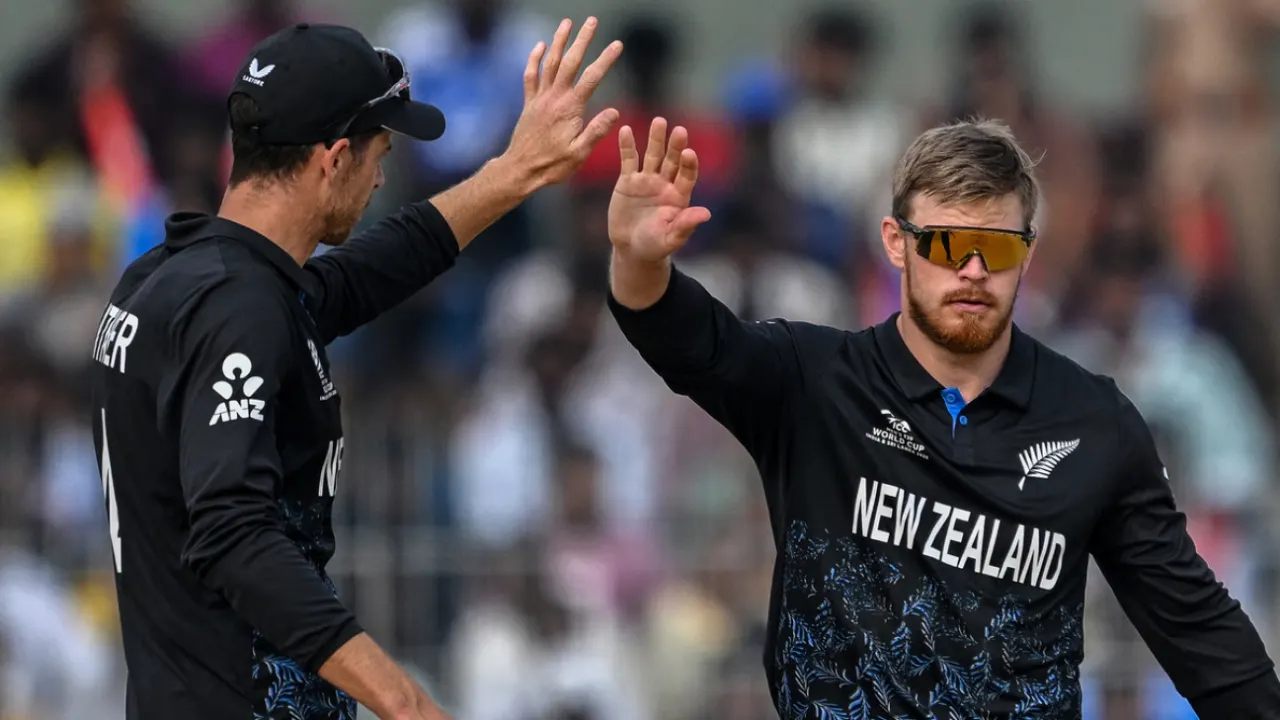
That context helps explain why captain Mitchell Santner turned to Rachin Ravindra in the 18th over of New Zealand’s opening match against Afghanistan. Ravindra, a left-arm spinner, removed top-scorer Gulbadin Naib for 63, conceding 14 runs in a high-pressure phase.
A similar experiment followed against UAE, this time with Glenn Phillips entrusted with the 18th over. Bowling offspin to right-handers Muhammad Waseem and Milind Kumar, Phillips conceded 27 runs. Despite the cost, New Zealand won both matches, and the calculated risks did not hurt their results.
With a group game against Canada coming up, New Zealand may again use the opportunity to expose Phillips and Ravindra to death-overs bowling, ensuring they have recent experience if called upon later in the tournament.
“Obviously, Beast [Bracewell] is a big loss for us with his power and his bowling,” Phillips said. “But we do have the stocks with Ish Sodhi, Rach, and myself to make up overs, especially in this part of the world. We both love our bowling and being given the opportunity to contribute in both facets of the game. Having James Neesham there as well helps cover that fifth-bowler role with both seam and spin.”
If New Zealand progress to the Super Eights, all three matches will be played in Colombo, where spin is expected to play a significant role.
“The conditions in Sri Lanka are going to be very different,” Phillips said. “There’s no magic nugget in cricket. It’s about doing what we do best for longer periods. Scores of 160 or 150 might be competitive with more turn, but you never know — you could still get a belter where 200 is on.”
New Zealand’s team balance places heavy demands on their senior players: Phillips for quick runs and overs, the new-ball bowlers for early breakthroughs, and the captain to control the middle overs. In the recent bilateral series against India and in their last match against South Africa, those pressures occasionally told.
“There hasn’t necessarily been a clear pattern to our defeats,” Phillips said. “Sometimes the top order fires, sometimes the middle order steps up. That’s the nature of T20 cricket. The intent has been clear — it just comes down to execution.”
One area where there is no compromise is fielding intensity. Phillips underlined that against UAE when he sprinted along the leg-side boundary and dived full length to save two runs off a sweep shot.
“It has to be pretty far for me not to put in the effort,” he said. “If the team needs an energy boost, I’ll dive whether I get there or not. That said, there are moments when you have to be smart across a long tournament. But if there’s even a small chance I can get there, I’ll throw myself at it.”
As New Zealand look ahead to tougher conditions and stronger opposition, the exposure being given to Phillips and Ravindra could prove vital — not just to cover short-term gaps, but to strengthen the squad for the business end of the World Cup.


