
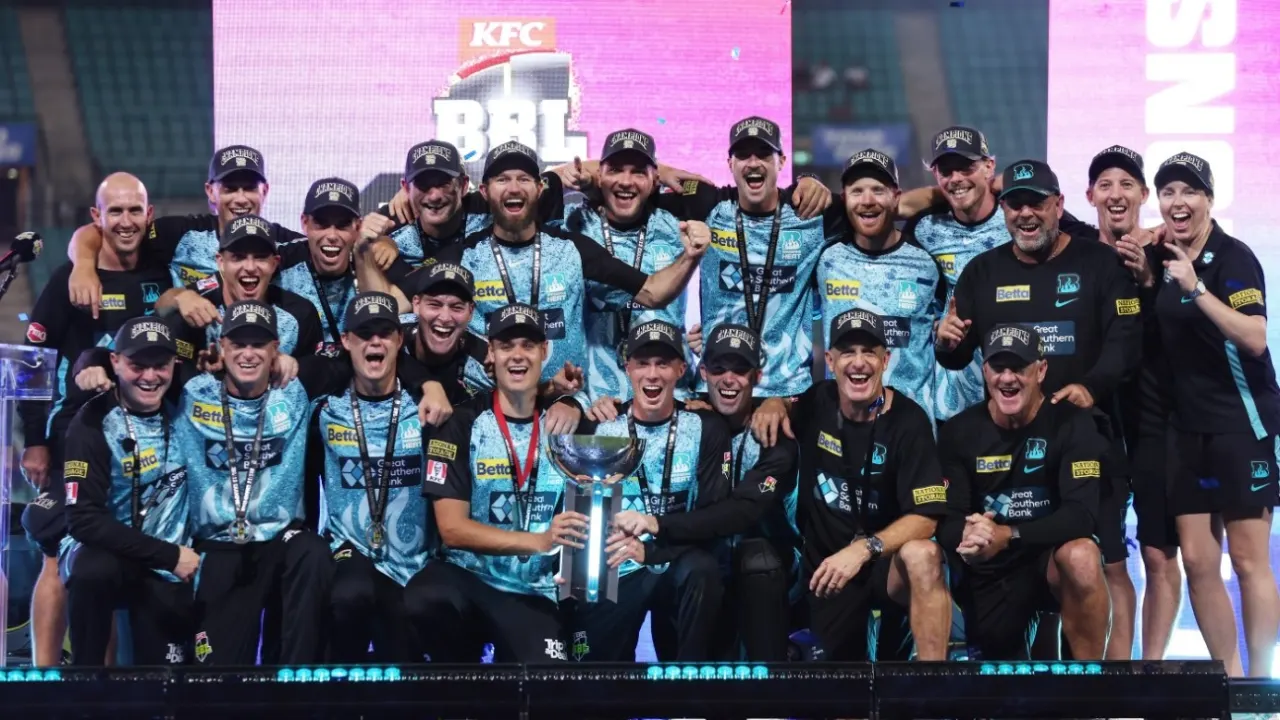


With two major states rejecting private investment, Cricket Australia CEO Todd Greenberg admits reaching consensus is “difficult” and signals a shift toward alternative or hybrid funding strategies
Thank you for reading this post, don't forget to subscribe!Cricket Australia (CA) has been forced to rethink its strategy to privatise the Big Bash League (BBL) after Queensland officially joined New South Wales (NSW) in rejecting the proposal to sell stakes in franchises to private investors.
NSW, which oversees the Sydney Sixers and Sydney Thunder, had already opposed the model. Now, Queensland Cricket—which runs the Brisbane Heat—has declined to proceed further after completing a detailed review process.
In an official statement, Queensland Cricket confirmed it would not move into the next phase of the sales process, instead prioritising organic growth of the league without selling a minority stake. The board emphasized its commitment to expanding cricket participation and strengthening the BBL through existing structures rather than external capital.
Speaking on the issue, CA chief executive Todd Greenberg acknowledged the complexity of the situation, citing sharply divided opinions among the six state associations. While NSW and Queensland oppose private investment, states like Victoria, Western Australia, and Tasmania strongly support it. South Australia, meanwhile, has proposed a hybrid approach, allowing flexibility for states to opt in at different stages.
Greenberg also highlighted that Queensland’s opposition differs from NSW’s stance. While Queensland is wary of increasing player payments, NSW supports higher investment in players but prefers a self-funding model through incremental revenue rather than private capital.
One such revenue avenue proposed by NSW involves increasing returns from the wagering industry through product fees. However, CA has firmly rejected this route, with Greenberg stating that relying on betting revenue is not aligned with the sport’s long-term vision.
A major driver behind CA’s push for private investment is the growing financial gap between the BBL and other global T20 leagues. Competitions like South Africa’s SA20 and England’s The Hundred are offering significantly higher player salaries, while the BBL salary cap remains comparatively modest. This disparity raises concerns that Australian players may increasingly prioritize overseas leagues over domestic commitments.
Despite these financial pressures, there is widespread concern among stakeholders about the risks of allowing foreign ownership into Australian cricket. Issues around control, governance, and long-term interests have made several states cautious.
Greenberg clarified that CA’s proposal aims to mitigate these risks by directing private capital into individual clubs rather than the league or governing body. This structure is designed to ensure that decision-making authority remains with CA while still enabling clubs to access additional resources.
Looking ahead, CA is now considering alternative or hybrid models—similar to South Australia’s proposal—that could allow selective participation from states. However, Greenberg admitted that developing a workable solution will take time due to the lack of consensus.
For now, the BBL will continue in its current format through the 2026–27 season, with any structural or investment changes likely to be revisited ahead of the 2027–28 cycle.


