


Mitchell Starc fumes after Jamie Smith survives review, following Alex Carey reprieve as Snicko errors spark ICC technology debate
Thank you for reading this post, don't forget to subscribe!Australia’s frustration with cricket’s edge-detection technology resurfaced during the third Ashes Test at the Adelaide Oval, with Mitchell Starc openly calling for Snicko to be “sacked” after another controversial decision went against the hosts. The incident followed an admission from BBG Sports, the suppliers of Snicko, that operator error had led to Alex Carey being wrongly reprieved during his opening-day century. As a result, England’s review was reinstated by match referee Jeff Crowe on the second morning, a rare move that immediately put the spotlight on the reliability of the technology.
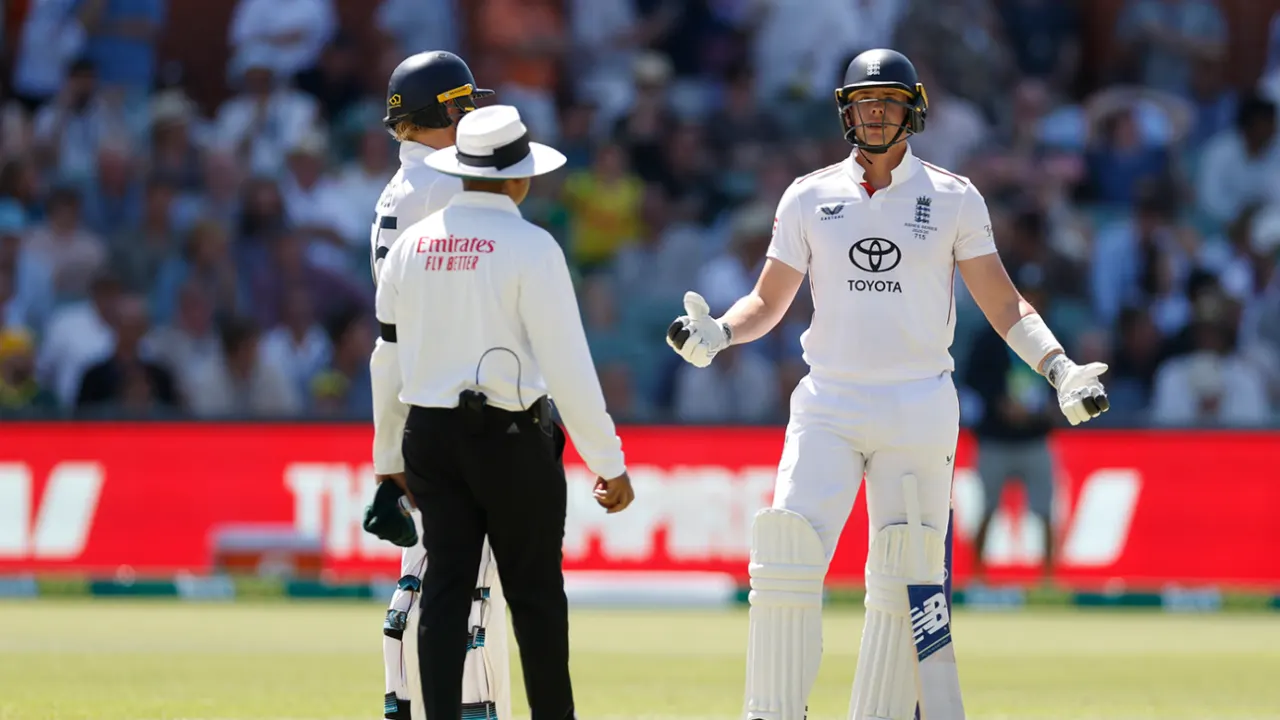
Tensions rose further when England batter Jamie Smith survived a close call off Pat Cummins’ bowling. Usman Khawaja appeared to have taken a sharp catch at first slip, but after consulting Snicko, TV umpire Chris Gaffaney ruled Smith not out, suggesting the ball had brushed the helmet rather than the glove. The Australian players were visibly unhappy with the decision and strongly believed the ball had made contact with Smith’s glove.
Starc, speaking near the stump microphone after the decision was confirmed, did not hide his anger. He labelled Snicko “the worst technology there is,” pointing out that mistakes had now occurred on consecutive days. His comments echoed a growing sentiment within the Australian camp that confidence in the system was rapidly eroding.
Ironically, Smith’s innings ended just two overs later when he was given out caught behind off Cummins. This time, Snicko showed a spike one frame after the ball had passed the bat, which fell within the accepted margin for error. The on-field umpires had not made a decision and instead referred it to the third umpire, once again fuelling debate over the technology’s consistency.
Former elite umpire Simon Taufel weighed in on the controversy, criticising the ICC’s decision to remove the soft signal from international cricket two years ago. He argued that umpires should be encouraged to make decisions on the field, with technology acting as support rather than a replacement. According to Taufel, the absence of a soft signal means that any doubt in the technology now almost always benefits the batting side, something he believes is unfair to the game.
Snicko, officially known as Real-Time Snickometer, is one of two edge-detection technologies approved by the ICC, alongside the more commonly used UltraEdge, which is owned by Hawk-Eye. The selection of technology is made by the host broadcaster, who also fund it, and Snicko is understood to be the cheaper option.
Cricket Australia chief executive Todd Greenberg confirmed the organisation’s dissatisfaction with the situation, stating that the governing body was seeking answers after the opening-day error. He made it clear that CA was not happy with the standard of the technology and needed assurances that similar mistakes would not be repeated.
Any changes to protocols or licensed technologies would require approval from the ICC’s cricket committee and chief executives’ committee. The ICC declined to comment when contacted. From the England camp, batting coach Marcus Trescothick admitted the situation was far from ideal, noting that questionable decisions had affected both teams over the first two days.
Former Australia captain Ricky Ponting was also critical, stating that the technology being used was not on par with systems deployed in other countries. He revealed that even umpires struggle to trust it, which puts the third umpire in an impossible position. Ponting stressed that for the decision-making process to work, the technology in place must be completely reliable.


